
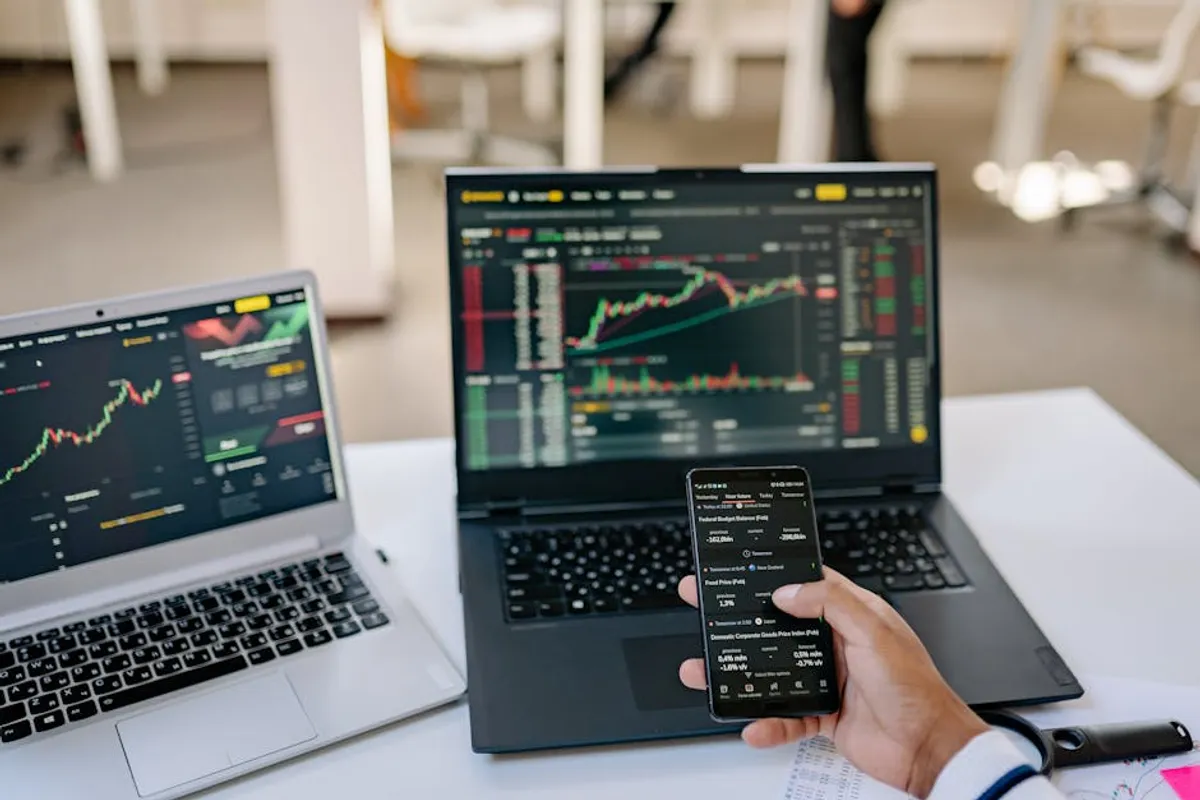
For financial professionals, publishers, and digital strategists, access to timely market information is not merely an advantage; it is a fundamental requirement for informed decision-making and content relevance. Real-time financial updates provide this critical edge, delivering immediate data on market movements, asset prices, economic indicators, and news events as they unfold. Understanding the precise meaning, diverse applications, and underlying mechanisms of these updates is crucial for anyone looking to leverage financial data effectively, whether for trading, risk management, market analysis, or the creation of compelling, data-driven content.
Defining Real-time Financial Updates
Real-time, in the context of financial updates, refers to the immediate transmission and availability of data as soon as it is generated or recorded. This distinguishes it significantly from near-real-time or delayed data, which might have a lag of seconds, minutes, or even longer. For instance, a stock price quoted as "real-time" updates instantaneously with every transaction or bid/ask change, rather than refreshing every 15 minutes as is common with delayed feeds.
The core characteristic of real-time data is its immediacy. This means:
- No Delays: Information is processed and delivered without artificial holdbacks.
- Event-Driven: Updates are triggered by specific market events, such as trades, order book changes, or economic announcements.
- High Frequency: Data streams can involve thousands or millions of updates per second, depending on market volatility and the specific asset.
This level of immediacy is essential because even micro-second differences can impact trading decisions, risk exposure, and the perceived accuracy of published financial content.
Key Uses Across Industries
The applications of real-time financial updates extend beyond active trading, impacting various sectors that rely on current market conditions.
Financial Trading and Investment
Primary Use: Enables high-frequency trading, algorithmic trading, and rapid manual decision-making. Traders rely on real-time price feeds, order book depth, and news to execute trades at optimal moments, manage positions, and react to sudden market shifts.
Risk Management and Compliance
Primary Use: Monitors portfolio exposure and counterparty risk in real-time. Financial institutions use these updates to calculate Value at Risk (VaR), track margin calls, and ensure compliance with regulatory limits as market conditions evolve. Immediate data helps prevent significant losses by triggering automated alerts or actions when thresholds are breached.
Market Analysis and Research
Primary Use: Provides analysts and researchers with the most current data for technical analysis, fundamental analysis, and economic modeling. Real-time feeds allow for dynamic charting, indicator calculations, and the identification of emerging trends or anomalies as they develop, offering deeper insights than historical or delayed data sets.
Financial News and Media Aggregation
Primary Use: Powers live blogs, news tickers, and dynamic data visualizations for financial media outlets and publishers. Delivering real-time market data alongside breaking news enhances user engagement, establishes authority, and provides immediate context for economic events. For content creators, this translates into more timely and relevant articles, improving search visibility for trending topics.
Personal Finance Management
Primary Use: Informs individual investors about their portfolio's current value and provides up-to-the-minute quotes for tracking specific assets. While often presented in a slightly delayed format for retail users due to cost, premium personal finance platforms can offer true real-time data for active individual traders.
Underlying Data Sources and Delivery Mechanisms
Accessing real-time financial data involves specialized infrastructure and protocols designed for speed and reliability.
Data Sources
Real-time financial data originates directly from exchanges, market data vendors, and news agencies. Exchanges (e.g., NYSE, NASDAQ, LSE) are the primary source for price and trade data. Market data vendors aggregate, normalize, and distribute this data, often adding value-added services like historical data and analytics. News agencies provide real-time economic announcements, corporate earnings, and geopolitical events that influence markets.
Delivery Mechanisms
The methods used to transmit real-time data are engineered for low latency:
- APIs (Application Programming Interfaces): RESTful APIs are common for requesting specific data points, but for true real-time streaming, WebSocket APIs are preferred. WebSockets maintain an open, persistent connection between client and server, allowing data to be pushed instantly without repeated requests.
- Data Feeds (e.g., FIX Protocol): Financial Information eXchange (FIX) protocol is a widely adopted standard for electronic communication in financial services. It facilitates the real-time exchange of trade information, order routing, and market data between participants.
- Proprietary Feeds: Many data vendors and exchanges offer proprietary data feeds that utilize specialized hardware and network infrastructure to achieve the lowest possible latency. These are often direct connections or multicast feeds.
Pro Tip: When evaluating real-time financial data solutions, differentiate between "real-time" and "near real-time." True real-time data often comes with significant infrastructure and licensing costs. For many content-driven applications, a 1-5 second delay might be acceptable and considerably more cost-effective, while still providing a highly dynamic user experience. Always clarify the actual latency and refresh rate offered by any data provider.
Challenges and Critical Considerations
Implementing and utilizing real-time financial updates involves several technical and commercial hurdles.
Data Latency and Accuracy
Achieving true real-time data with minimal latency is a constant challenge. Network infrastructure, data processing power, and geographical proximity to exchanges all impact delivery speed. Ensuring data accuracy and integrity is paramount, as incorrect or corrupted data can lead to erroneous decisions.
Cost Implications
Accessing high-quality, low-latency real-time data is expensive. Licensing fees from exchanges and data vendors can be substantial, particularly for redistribution rights or high-volume usage. Infrastructure costs for processing and storing this data also contribute to the overall expense.
Integration Complexity
Integrating real-time data feeds into existing systems or new applications requires significant technical expertise. APIs and protocols can vary, demanding custom development and ongoing maintenance to ensure seamless data flow and reliable operation.
Regulatory Compliance
Financial data is subject to strict regulations regarding its usage, storage, and redistribution. Compliance with various financial authorities and data privacy laws (e.g., GDPR, CCPA) is a critical consideration, especially for platforms that display or process personal financial information.
Leveraging Real-time Updates for Digital Platforms
For publishers and digital platforms, integrating real-time financial updates can transform content and user experience.
Consider dynamic content modules that automatically update stock prices within articles, live tickers on economic news pages, or interactive charts that reflect market movements instantly. This not only keeps content fresh and relevant but also positions the platform as a reliable source for current financial information. For SEO, timely content around trending financial topics, enriched with live data, can capture significant organic traffic during periods of market volatility or major economic announcements. Furthermore, offering premium tiers with enhanced real-time data access can create new subscription revenue streams.
Strategic Implementation for Ongoing Relevance
Integrating real-time financial updates requires a strategic approach that balances technical capabilities with commercial objectives. Begin by clearly defining the specific data points needed and the acceptable latency for your use case. Evaluate data providers not just on cost, but on their data accuracy, reliability, API documentation, and support. Plan for scalable infrastructure to handle data volume and ensure robust error handling. For content publishers, focus on how real-time data enhances storytelling, provides immediate context, and drives user engagement, ultimately reinforcing your platform's authority and utility in the financial domain.
Frequently Asked Questions
What is the difference between real-time and delayed financial data?
Real-time financial data updates instantaneously as events occur, typically within milliseconds. Delayed data, conversely, has a predetermined lag, often 15-20 minutes, for cost or regulatory reasons.
Why is real-time data more expensive?
The higher cost of real-time data stems from the infrastructure required for immediate delivery, the direct licensing fees from exchanges, and the commercial value derived from its immediacy in trading and analysis.
Can I use real-time financial data on my website?
Yes, but you typically need to license the data from a market data vendor or directly from an exchange. These licenses often specify usage terms, such as whether the data can be displayed publicly or used for internal purposes only.
What technical skills are needed to integrate real-time financial updates?
Integration usually requires proficiency in programming languages (e.g., Python, Java, JavaScript) for API interaction, understanding of data streaming protocols like WebSockets, and familiarity with database management for data storage and retrieval.